 Nihongo Nihongo
U-verbs and Ru-verbs in Japanese
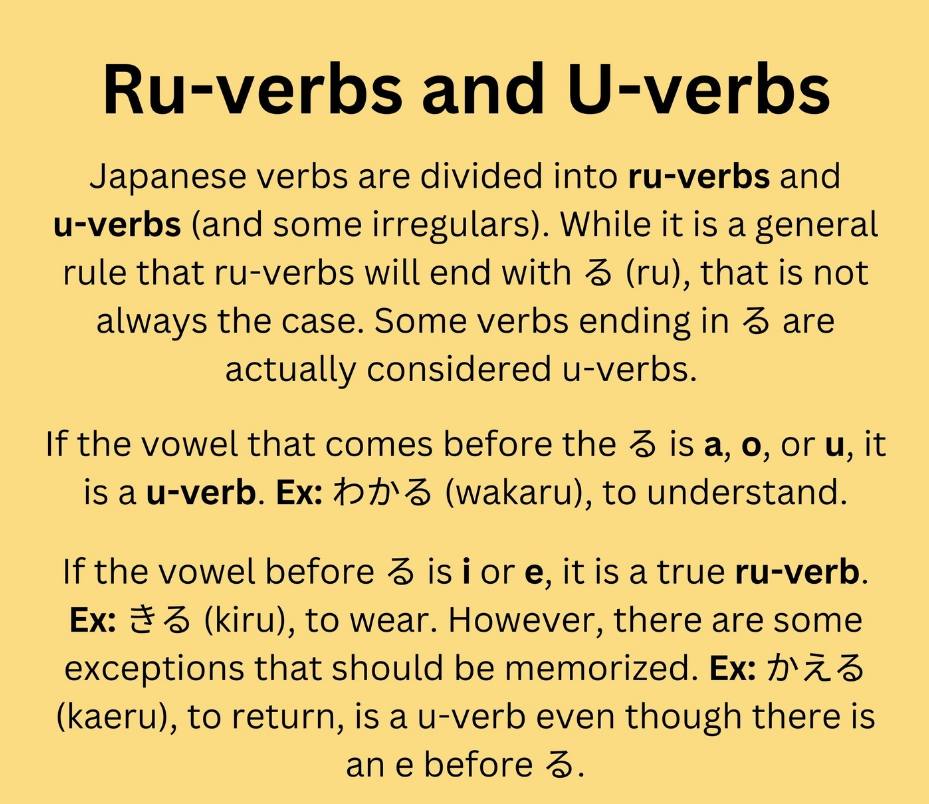
る-verbs and う-verbs – Know the Difference!
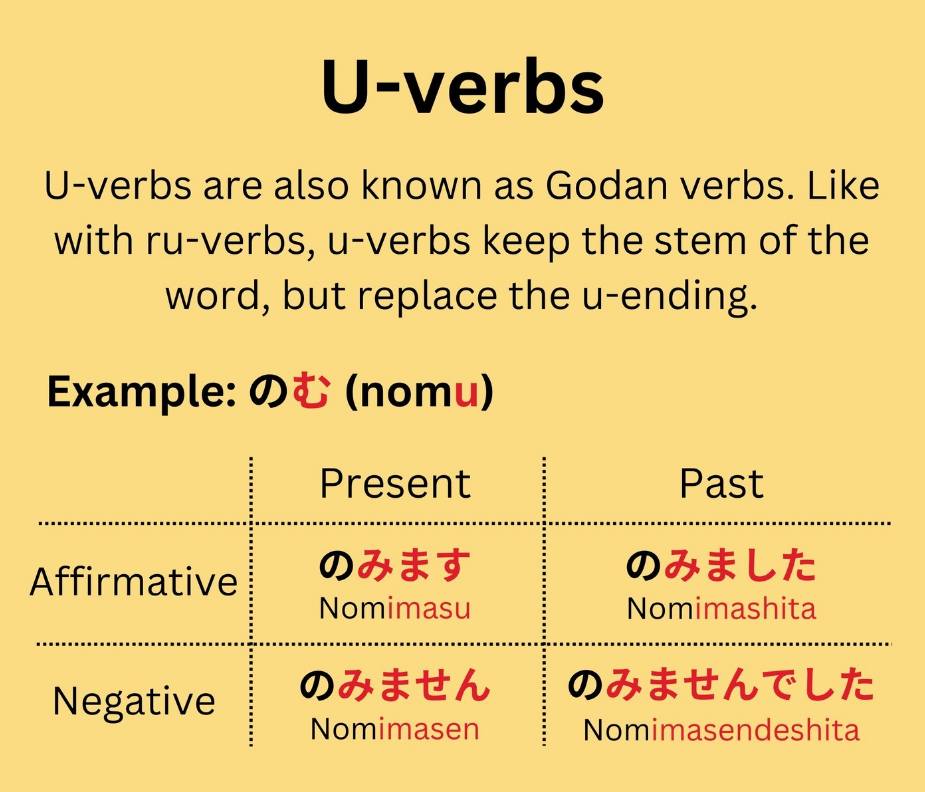
Why it matters:
Knowing whether a verb is る or う affects:
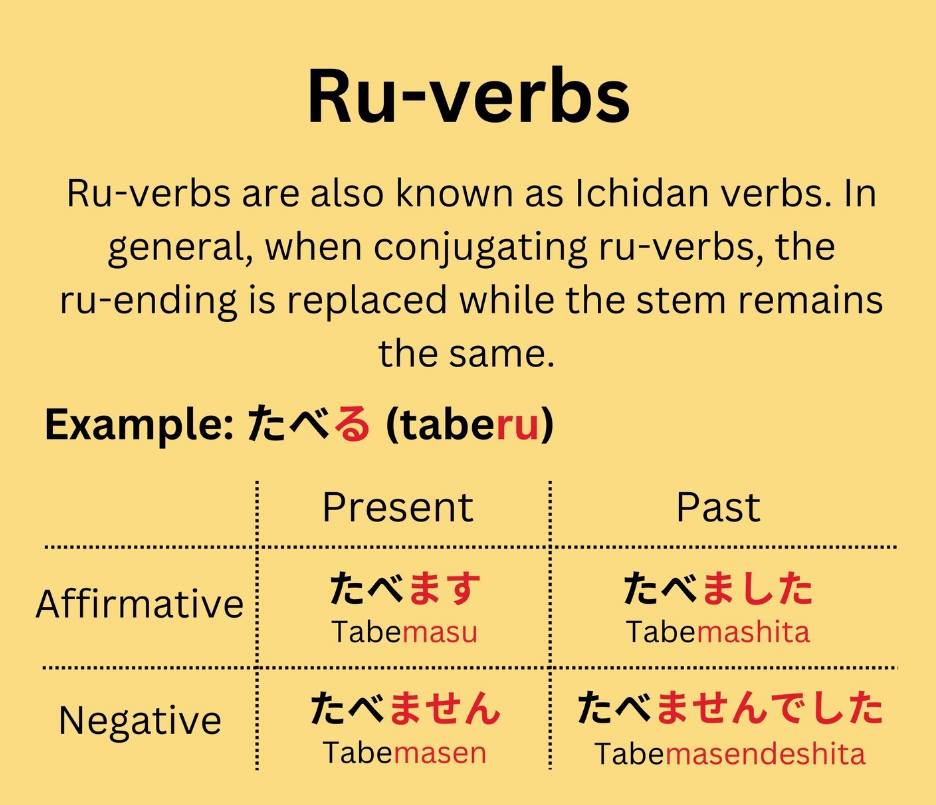
– Conjugation (ます-form, て-form, plain negative, etc.)
– Command form
– Potential form
– Past tense endings
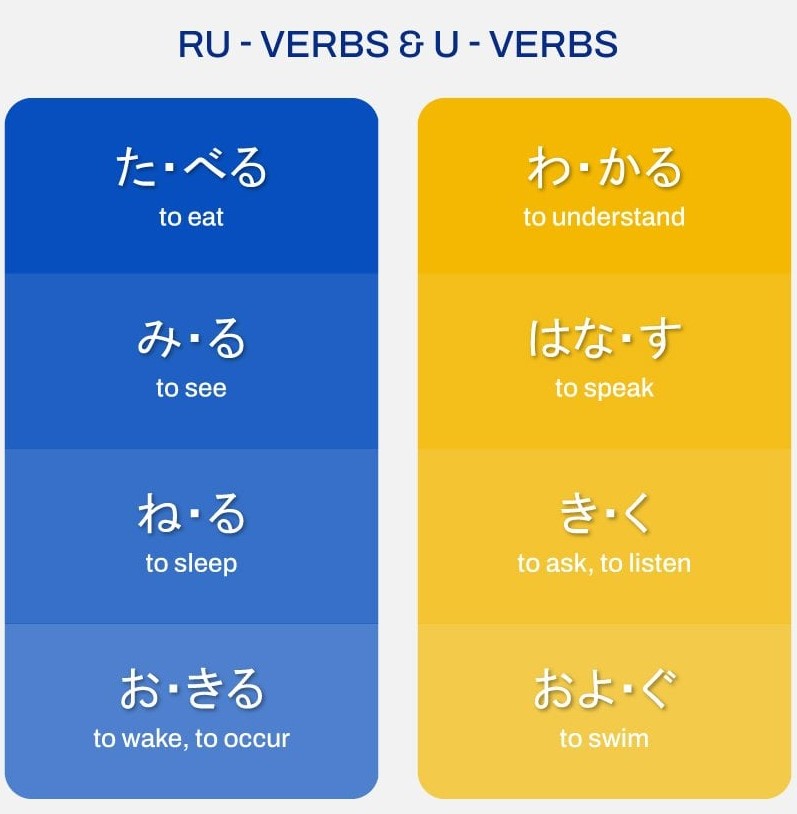
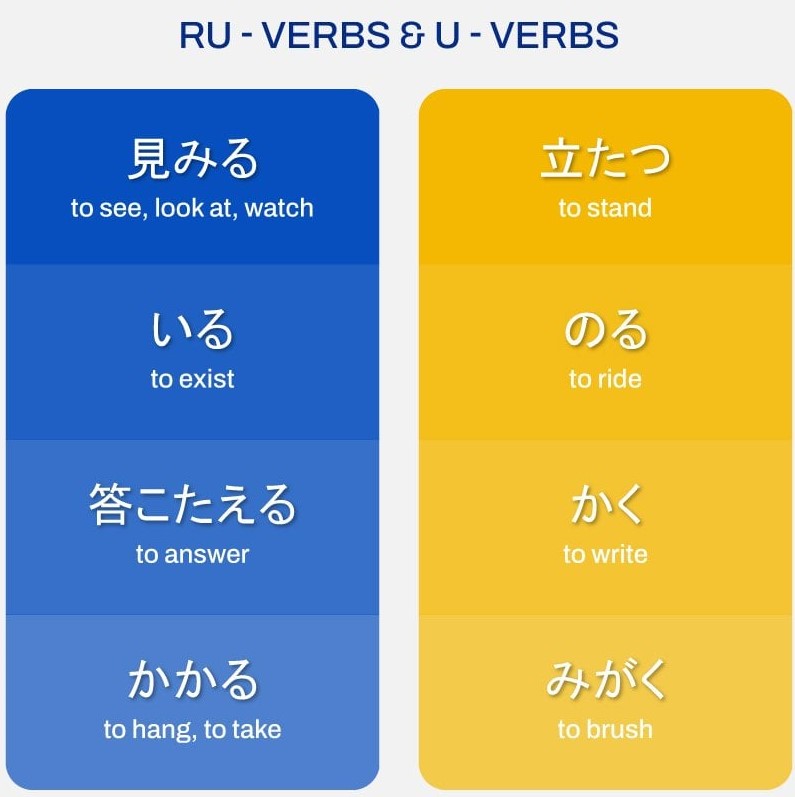
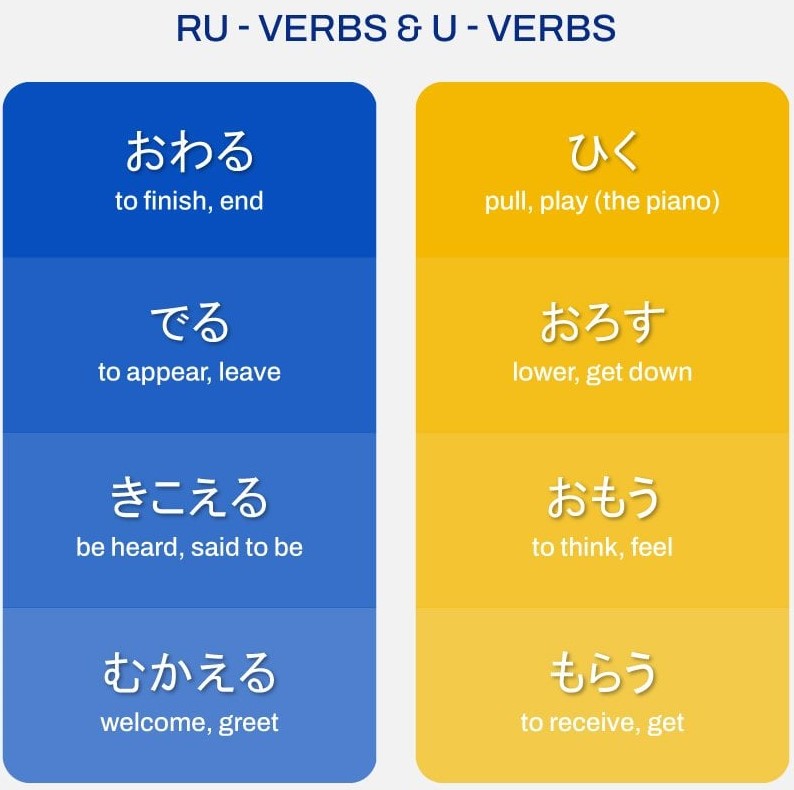
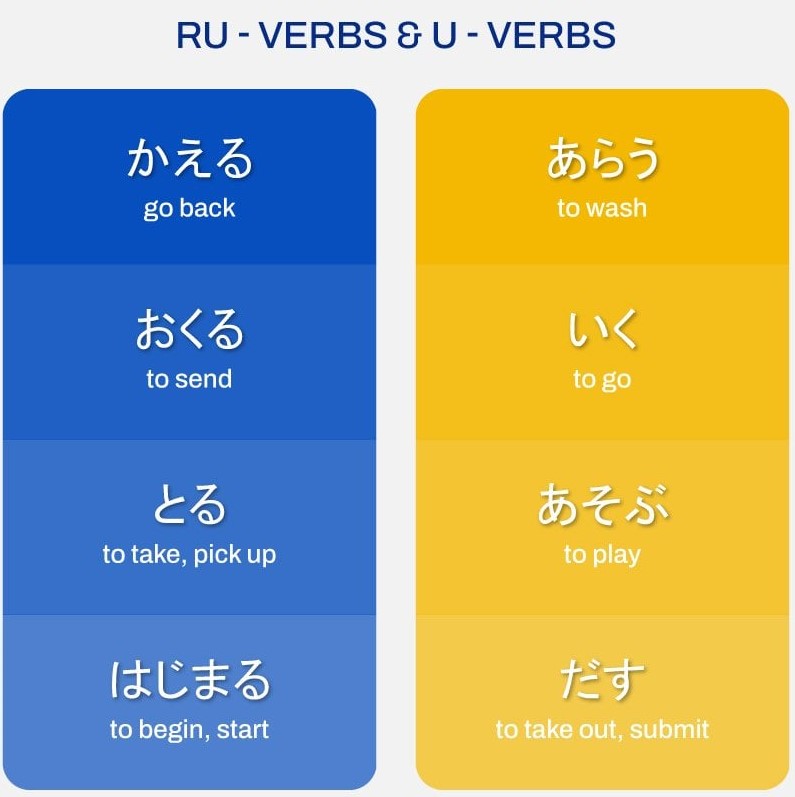
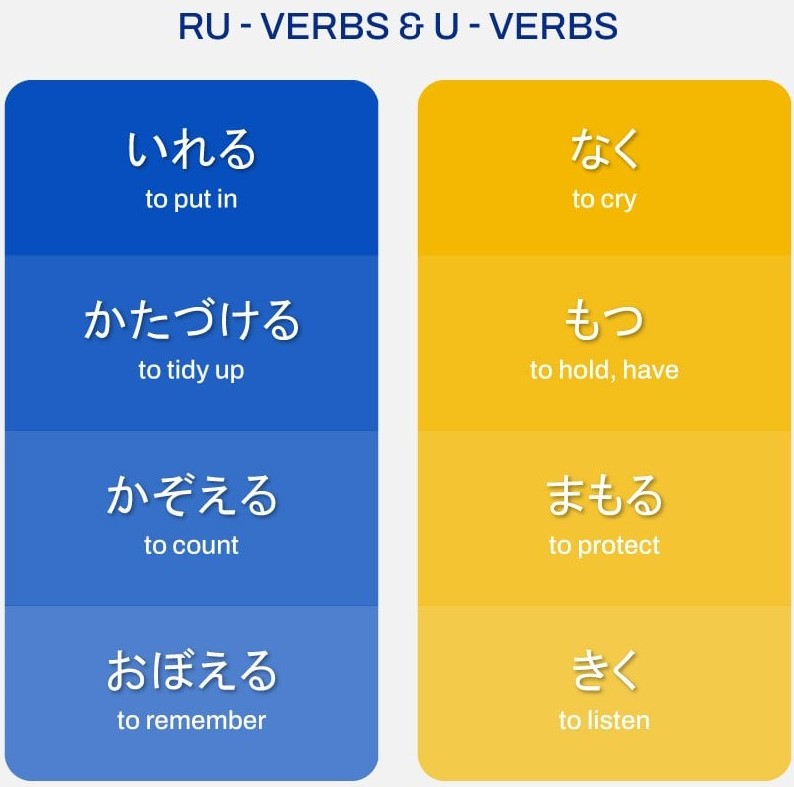
Ichidan / る-verbs:
– End with る, and usually have a vowel sound before the る (like みる, たべる)
– Easier to conjugate!
✅ たべる → たべます
✅ おきる → おきます
Godan / う-verbs:
– Can end in る, く, う, etc.
– More varied endings and conjugation patterns
✅ はなす → はなします
✅ のむ → のみます
✅ およぐ → およぎます
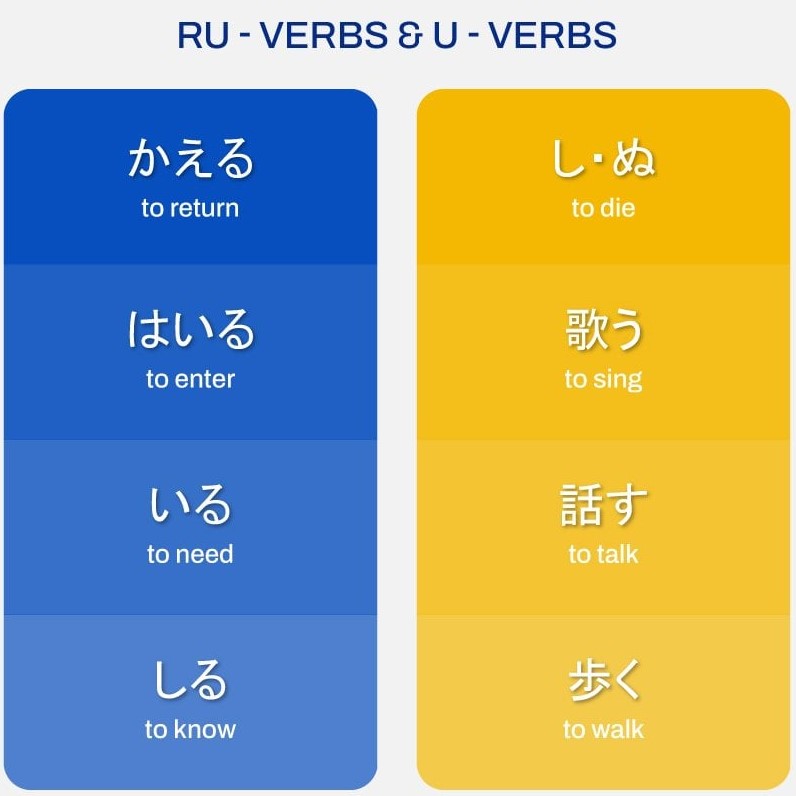
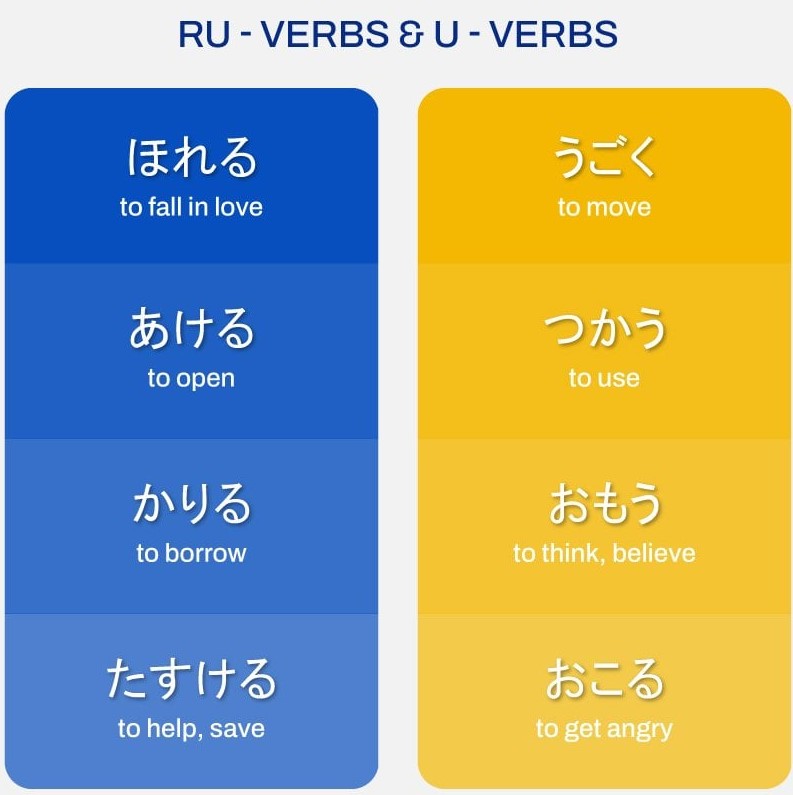
⚠️ Be careful! Some verbs end in る but are actually う-verbs! (Like: かえる, はいる, しる)
Related Post:
Top 100 Common Japanese Adverbs
Shopping Words in Japanese